
AI Merge · Free ADHD Belief Score
You don’t want your ADHD fixed. You want to finish the thing you started.
Take the free 5-question ADHD Belief Score to uncover a hidden belief that may be shaping how you respond in the very moments you most want to start.
Free · 5 questions · About 10 minutes · No credit card
Four patents held by the creator · a reflective tool, not a diagnosis.
01 · The ADHD week you already know
It never happens on one bad day.It happens on a hundred ordinary ones.
Most ADHD advice describes the behaviour. This is about one week you have probably already lived.

By Thursday it is not a plan any more. It is a rescue.
And the rescue always works, which is the problem.
- MondayYou know exactly what needs doing. You even want to do it.
- TuesdaySomething smaller gets finished instead. It was easier to start.
- WednesdayStill open. Still fine. There is still time.
- Thursday, 11pmNow you move. Full focus. Sometimes your best work.
- FridayRelief, and a quiet thought: next time I’ll start early.
The work got done, so pressure took the credit.
Do that a few hundred times and it stops being a schedule. It becomes a sentence about you: nothing moves unless it is an emergency.
Which ADHD pattern sounds most like you?
Tap one and you will see the shape your result would take.
02 · What ADHD is actually costing you
The problem was never the task.It is everything the task is standing in front of.
Ask most people what ADHD costs them and they name the thing they missed. It is rarely the thing.
 The version you are living
Finishing at midnight, and calling it focus.
 The version you want
Finishing on Wednesday, and still having the evening.
What the pattern quietly takes
- The idea you had in March, still unopened
- The version of the work only you could have made, traded for the version that fit the last four hours
- Evenings paid back to a deadline that never had to get that loud
- The apology you make to yourself on Friday, and mean
What you actually want
- To open the important thing first, once, and see what happens
- To do the good work without the panic tax on top of it
- To finish and still have the evening
- To trust yourself without needing an emergency to prove it
Nothing on the right requires a different brain. It requires one moment to go differently — and knowing which moment that is.
Free · 5 questions · About 10 minutes · No credit card
03 · Why the ADHD loop repeats
A loop does not need your permission.It only needs to work once.
Four steps. The fourth is the one that keeps the wheel turning.
The task matters
You know what to do and you want it done. Nothing is wrong yet.
Something smaller wins
A tab, a message, a task that will actually close today. Closing something feels like proof you are working.
Pressure arrives
The deadline gets loud enough to be unignorable, and suddenly starting is no longer optional.
You deliver — and the wrong thing gets the credit
The work is done, so your mind files the receipt under pressure worked. Not I worked.
This is the step that repeats

ADHD does not have to disappearfor Thursday to go differently.
The pull toward something easier can still show up. The sentence I’ll do it later can still arrive. The change is catching the one moment before the old conclusion takes over.
05 · From your words to your map
You write one messy paragraph.Here is what comes back.
Left: what one person typed. Right: the five things the Belief Score gave back.
I keep putting off important work even when I know exactly what to do. Once the deadline is close, I suddenly become productive.
I keep putting off important work even when I know exactly what to do. Once the deadline is close, I suddenly become productive.
Each underlined phrase is read into the matching stage on the right.
5 questions · ~10 min · answers stay private
The repeated moment
Important work stays untouched until the pressure becomes intense.
read from “I keep putting off important work”
A possible belief underneath
“I cannot rely on myself without an emergency.”
read from “even when I know exactly what to do”
The moment to watch
The first time attention leaves the task while there still appears to be plenty of time.
read from “once the deadline is close”
The next evidence
One meaningful step completed before urgency takes over. Small enough to actually happen.
read from “I suddenly become productive”
How it keeps proving itself
- waiting
- pressure
- intense action
- completion
- pressure gets the credit
The last step is the one that keeps the first step true.
Free · 5 questions · About 10 minutes · No credit card
06 · Your ADHD Belief Score
One number for the thingyou cannot see yourself.
It scores how much of that one ADHD moment you are actually choosing. It does not score your ADHD, and it is not a grade.
out of 100 · illustrative
The response arrives before you have chosen it, so the same week keeps repeating. This is where the most room to move sits.
Where most people land. The four dimensions show which part is holding you back.
You can open the thing that matters, take one real step, and let the day end without needing a rescue.
A wider shape means more of the moment is yours.
Colour only says which dimension it is, never how good the number is.
Free · 5 questions · About 10 minutes · No credit card
07 · The ten minutes, screen by screen
See the whole thingbefore you begin.
Every screen you will meet, in order. No call to book before you see a result, and no card at any point.
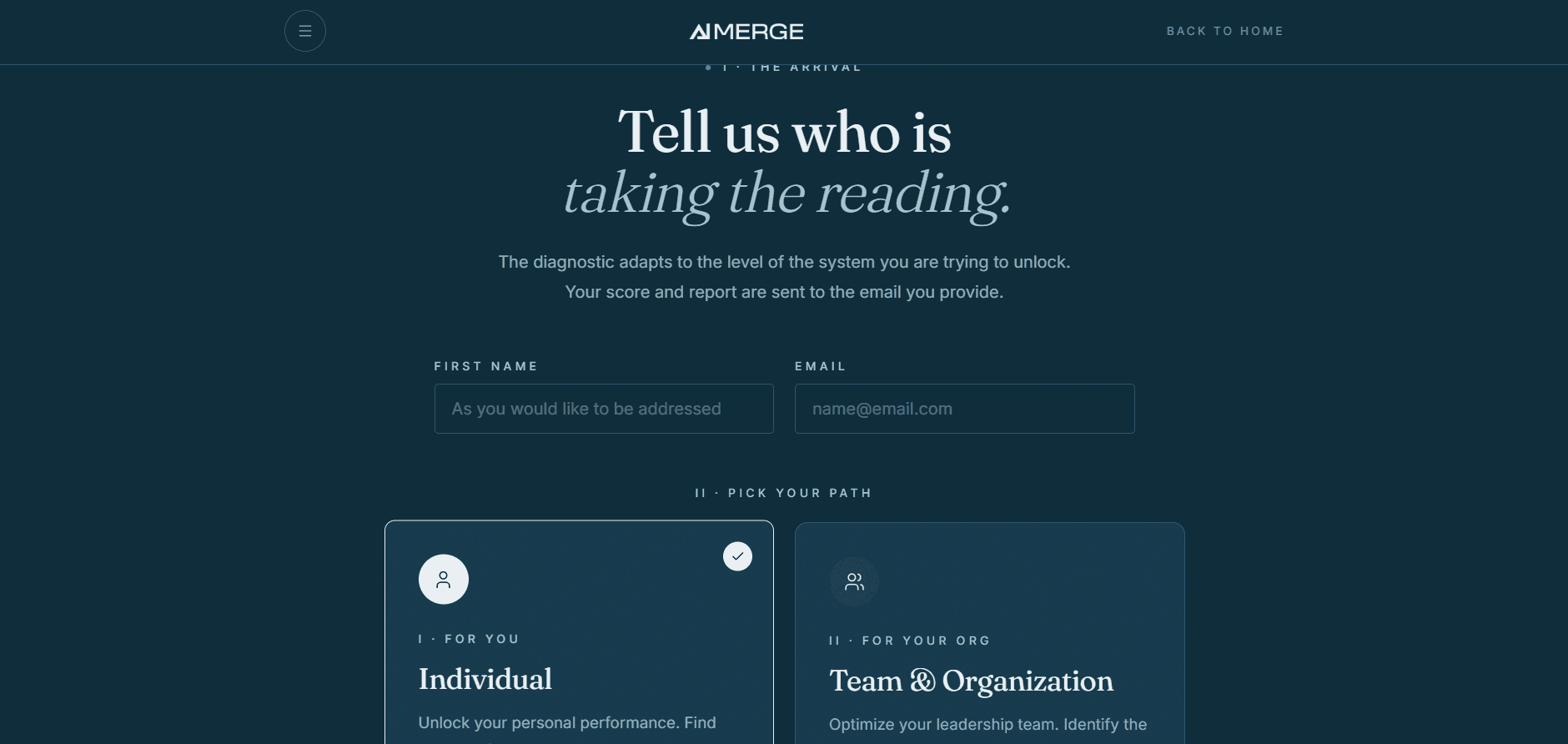
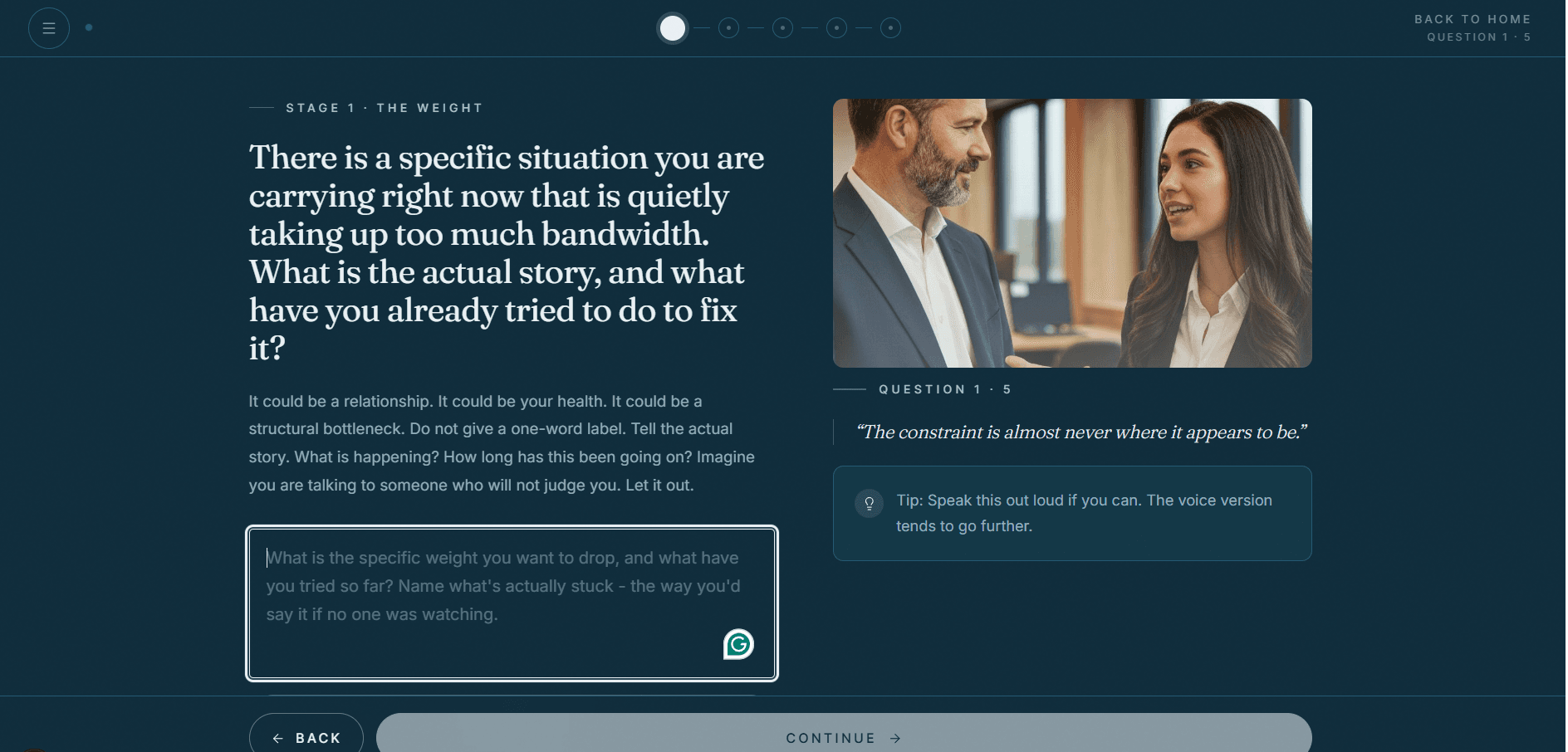

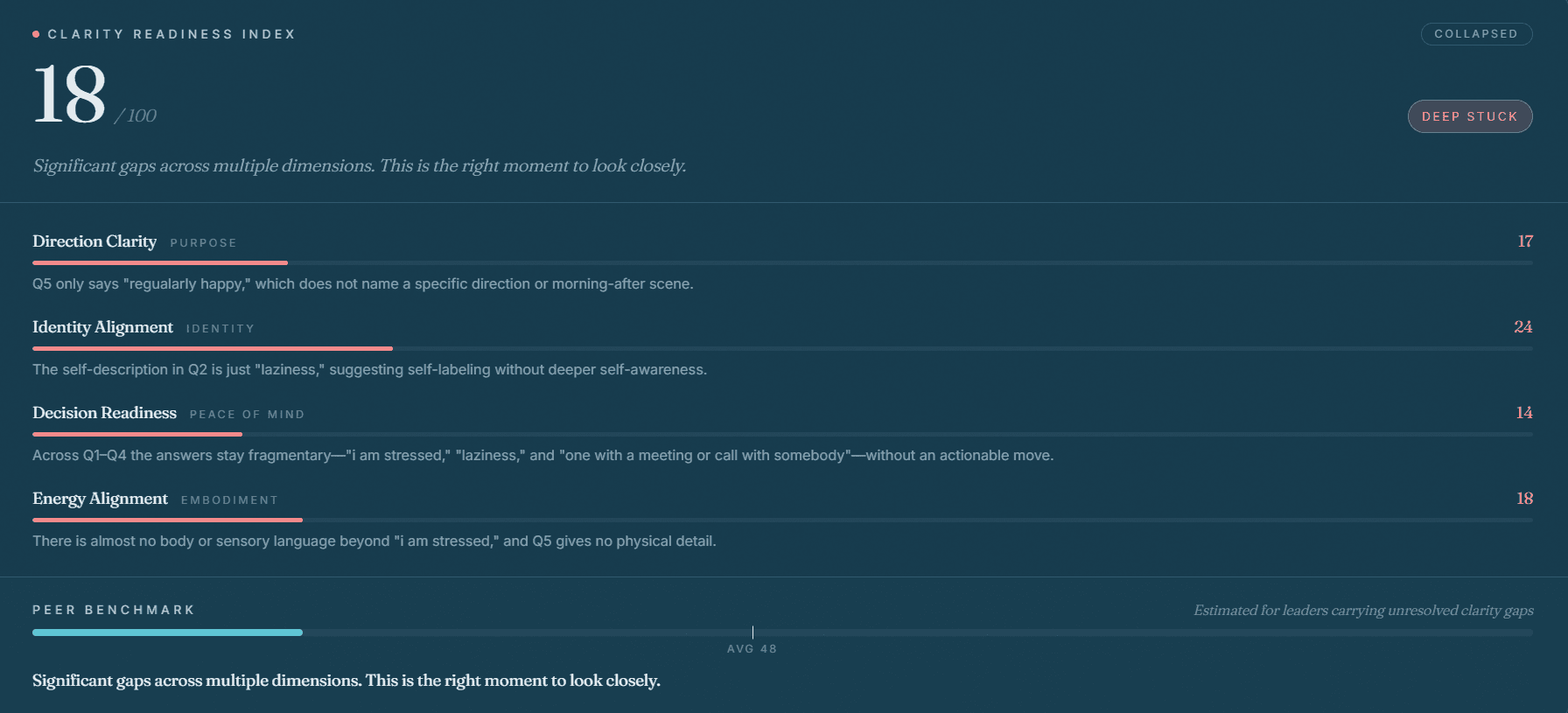
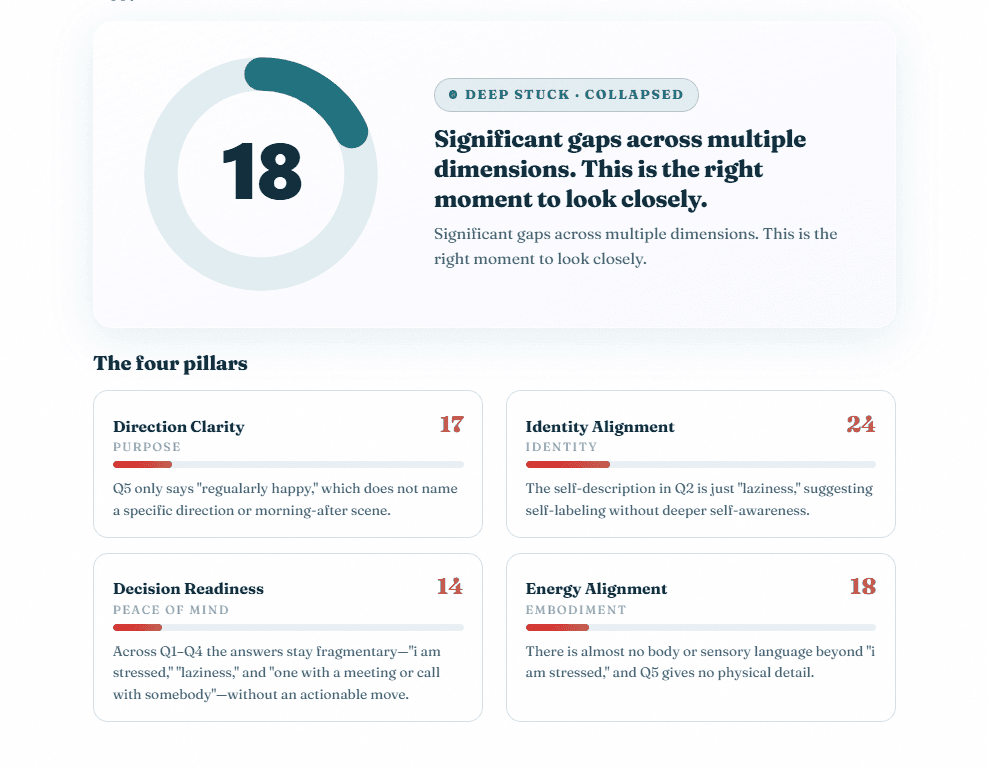
30 seconds
Tell us who this is for
Your first name and the email your result is sent to.
Your answers stay private and the score is yours to keep.
Illustrative — yours is built from your own words.
- Free · on screen in ~10 min
Your ADHD Belief Score
Your number out of 100, the four dimensions behind it, and the moment your own answers keep circling back to.
- Optional · after your score
The full written breakdown
The belief your words point to, where the loop starts, and the point where you have more choice than it feels like you do.
- Optional · if you want to go further
The AI Merge program
The guided path for people who would rather work a pattern than read about one.
Step one is free and complete on its own. You are never required to buy anything to receive it.
Free · 5 questions · About 10 minutes · No credit card
08 · Where this sits in your ADHD support
You have already triedthe layer above this one.
Keep every one of them. They work on real things. None of them is aimed at the layer underneath.
The next useful step may not be another system. It may be seeing the belief clearly enough to stop mistaking it for your identity.
Worth ten minutes if
- You have ADHD, diagnosed or strongly suspected
- You know what to do and still do not start
- You have read the advice and it did not change the moment
- You are willing to describe one situation honestly
Probably not for you if
- You are looking for a diagnosis or a clinical assessment
- You want a productivity template to install this afternoon
- You are in crisis and need immediate support — please contact a qualified service
09 · Who built the ADHD Belief Score
I could see the pattern.I could not see what it had taught me.
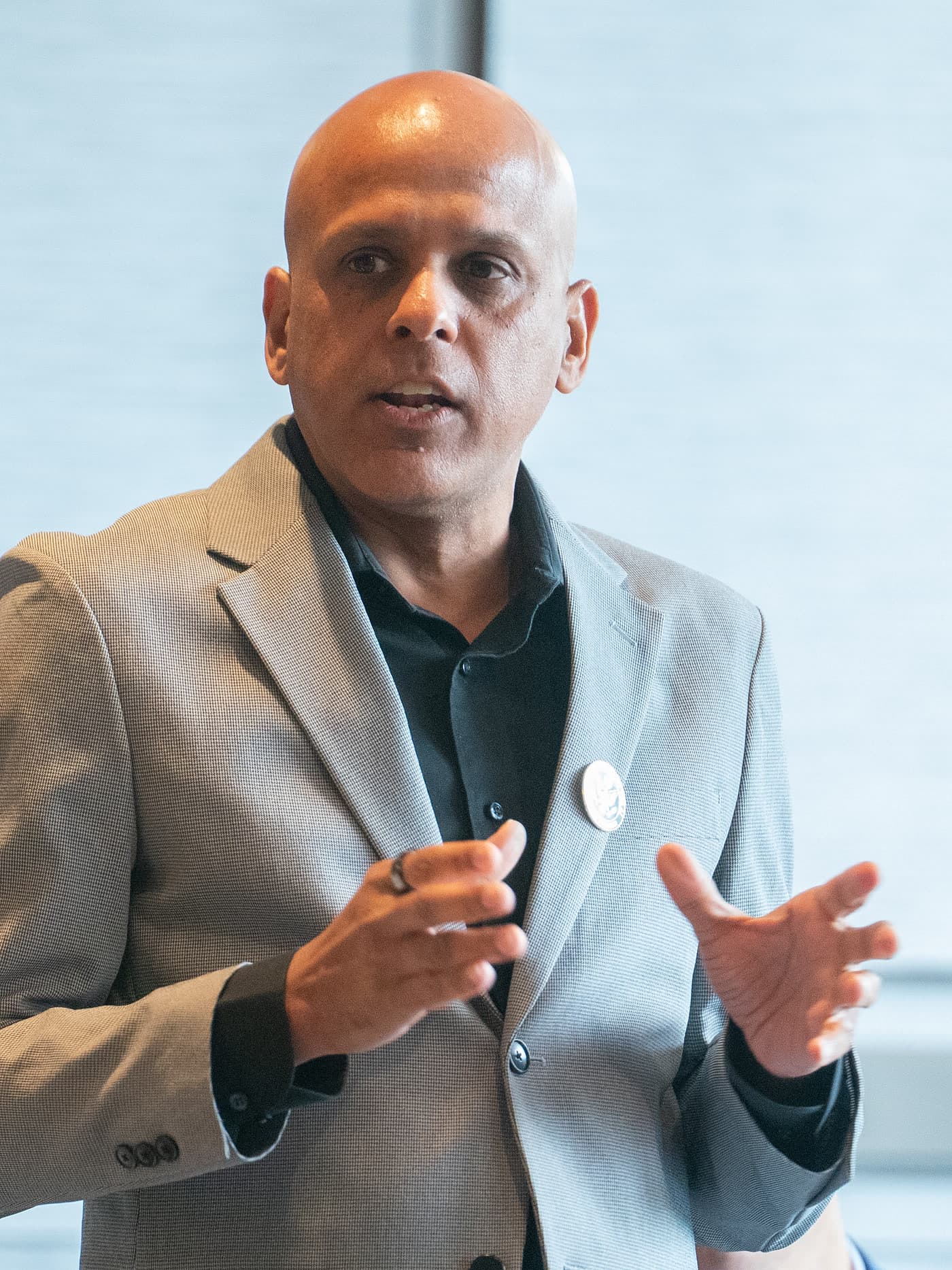
I could create plans, systems, and strategies. I could still watch something change the moment vision had to become consistent action.
Understanding ADHD gave me language for the behaviour. It did not automatically reveal the belief that had formed around it. That gap is why I built the Belief Score, using AI Merge, a methodology I created and published in the Mensa Research Journal.
The result is not meant to replace your judgment. It is meant to give you something clear enough to examine.
Manuj Aggarwal
- Founder & CIOTetraNoodle Technologies
- Four patentsGranted
- Mensa Research JournalPublished methodology
- AI MergeCreator of the method
In their words · tap a clip to play
“There’s a stress part of my brain that has gone silent.”
“It shifted something within. It’s something I’m going to be reading over and over again.”
Individual experiences vary. These accounts reflect experiences across the broader AI Merge work rather than the free ADHD Belief Score, and do not guarantee that another participant will receive the same result.
Prior professional work





Organizations shown reflect prior professional work by Manuj Aggarwal and do not imply endorsement of the ADHD Belief Score, AI Merge, TetraNoodle Technologies, or this offer.
10 · Before you start
Questionspeople with ADHD ask.
What it looks at
- One repeated moment
- The words you use for it
- The meaning that formed around it
- Where the next choice sits
What it does not do
- Diagnose ADHD
- Replace medication or therapy
- Read your mind or your history
- Decide who you are
Is this an ADHD diagnosis?
No. It does not determine whether you have ADHD. It is an educational and reflective tool, and it is not diagnosis, medical care, treatment, psychotherapy, or crisis support.
Does this claim belief causes ADHD?
No. ADHD is a real neurodevelopmental condition. The score examines whether a belief has become attached to one repeated ADHD experience. It does not claim belief causes ADHD or explains every ADHD difficulty.
Is it really free?
Yes. You receive your complete ADHD Belief Score before any paid offer is presented, and no credit card is required. Afterward you may be offered an optional next step. It is optional.
What if the result feels inaccurate?
Treat it as a hypothesis, not a verdict. Keep what fits. Correct, refine, or reject what does not. You remain the authority on your own experience.
Is technology deciding what is true about me?
No. It organises patterns in the information you choose to provide. It does not know your history, your medical records, or your social media, and it does not define who you are.
How long does it really take?
About ten minutes. Five questions, answered in your own words. There is no perfect wording and messy answers are fine — the reflection is built from how you actually talk.
What happens with the information I provide?
Your answers are used to generate your personalised score. Selected team members may review limited information for quality assurance, safety, or support, according to the published Privacy Policy. Your information is not sold.

The next task is already on your list.You decide who opens it.
Five questions about one ADHD moment, in your own words, and your Belief Score on screen straight away.
Free · 5 questions · About 10 minutes · No credit card
Your result is a personalised hypothesis. You decide what fits.